
Mia Farrow is a woman who has inspired the most famous men in art: from Frank Sinatra to Roman Polanski and Woody Allen. Throughout her career, she has starred in many films that are now considered cinematic classics. Her characters’ looks have been translated into collections by Miu Miu, Prada, Altuzzara, and many other designers. On the actress’s birthday, we revisit her iconic film roles.
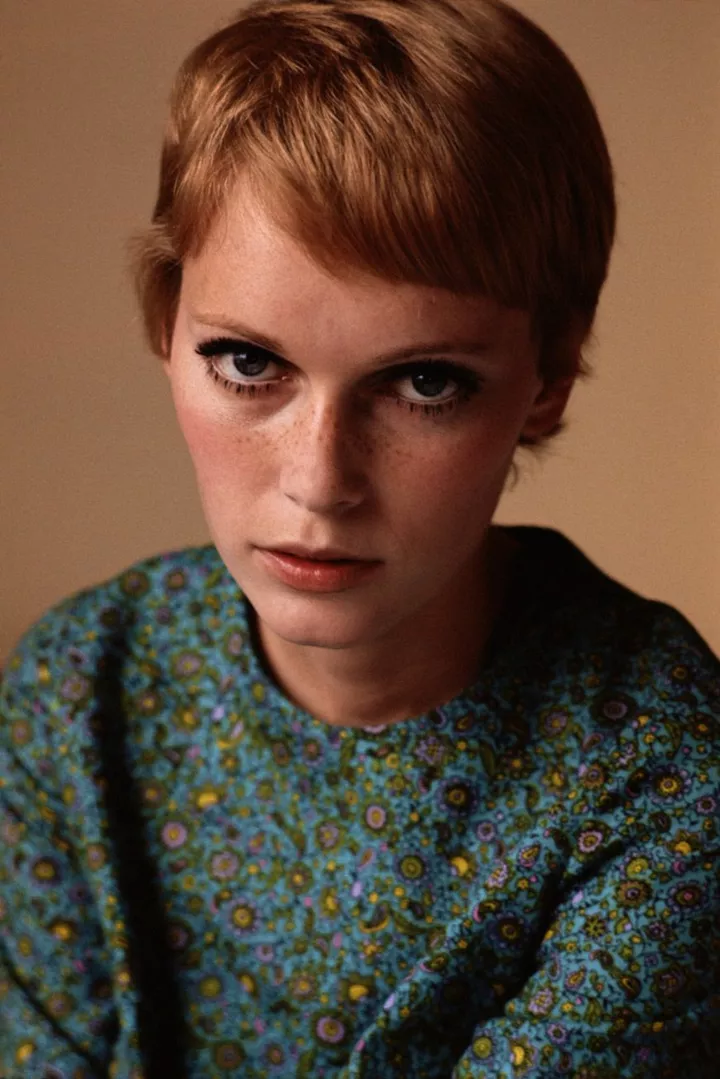 Mia Farrow in the 1960s
“Rosemary’s Baby”, 1968
“Rosemary’s Baby” is a prime example of how, even if you are the mother of the devil, your influence can extend beyond the destruction of Christianity – and the birth of Satan isn’t necessarily the only thing you’ll be remembered for. Indeed, one of the main reasons we love Rosemary, portrayed by Mia Farrow, is her style.
Реклама. 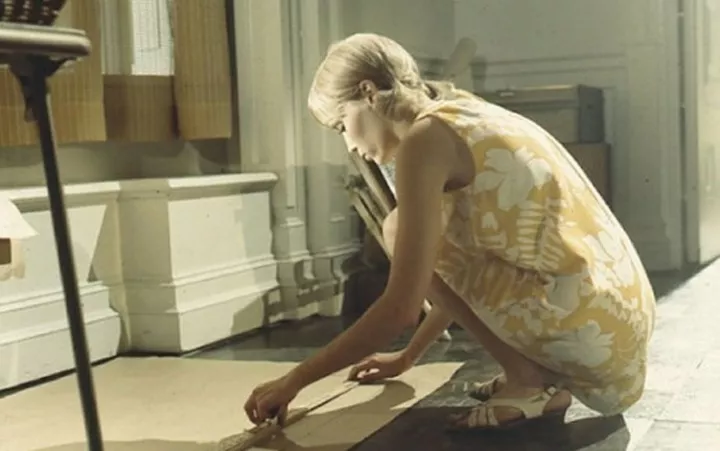
Her character embodies a typical sixties sentimental wardrobe, which is precisely what makes her style so remarkable. The emphasis in her outfits is not on silhouette but on color. During our first “encounter” with Rosemary, she’s dressed in a white dress paired with a matching quilted handbag. She is the epitome of feminine charm with her large eyes and innocent giggles. Throughout the film, she continues to wear items in subdued shades – light blue combined with white (the colors of the Virgin Mary) becomes a particularly familiar combination.
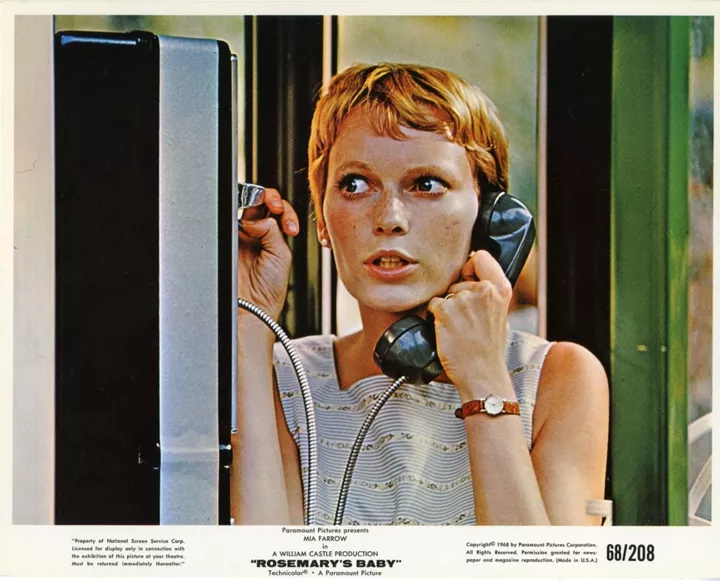
Notably, Rosemary’s appearance transforms periodically, highlighting how not only her body but also her character evolves. Thus, shortly before the fateful events in her life, she appears in a slightly oversized red pantsuit. The shade is clearly different from her previous choices – and, of course, this is a moment in the narrative that cannot be ignored.
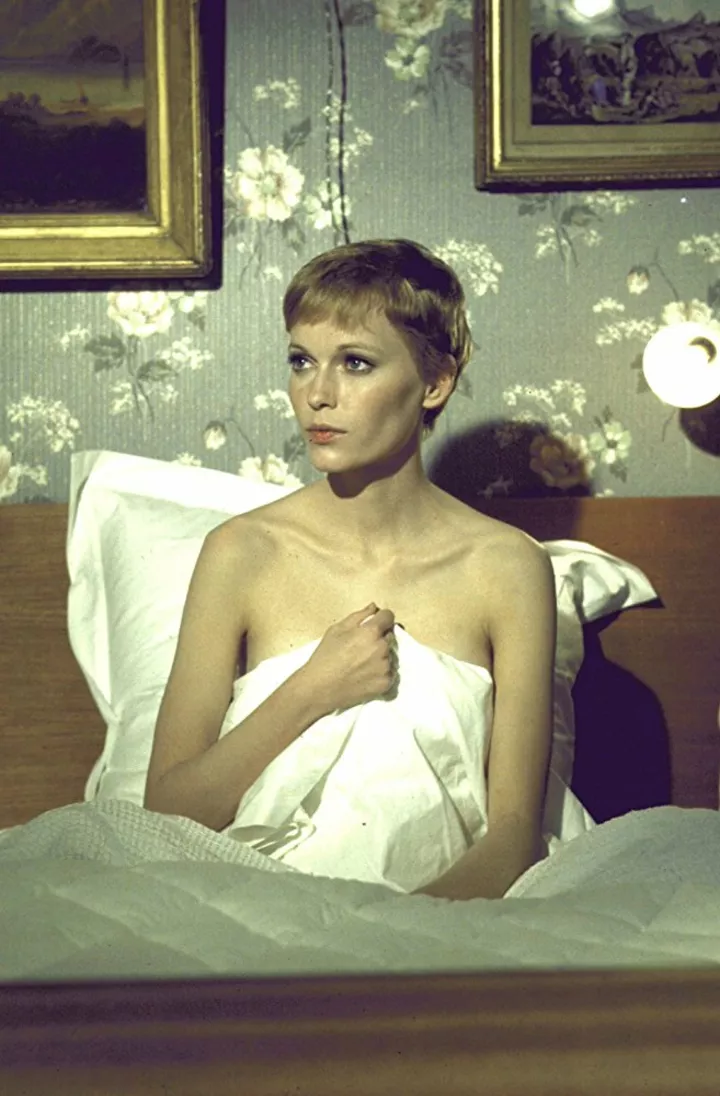
Once, a pregnant Rosemary returns home and proudly shows her husband her new pixie cut. “It’s from Vidal Sassoon. It’s very fashionable,” she explains. This moment, and indeed the entire hairstyle, can be considered one of the most fashionable in the film, as Mr. Sassoon was one of the most renowned stylists of his time.
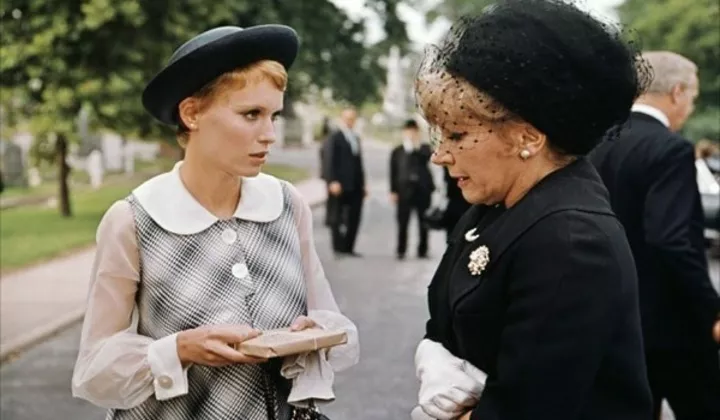
One of Rosemary’s most iconic looks was seen at Hutch’s funeral. She arrives to bid farewell to her friend in an outfit that can be described as the best mourning attire of all time. In a monochrome babydoll dress with a blurred plaid pattern, a Peter Pan collar, and chiffon sleeves – it’s pure innocence and an accurate archetype of sixties trends.
“The Great Gatsby”, 1974
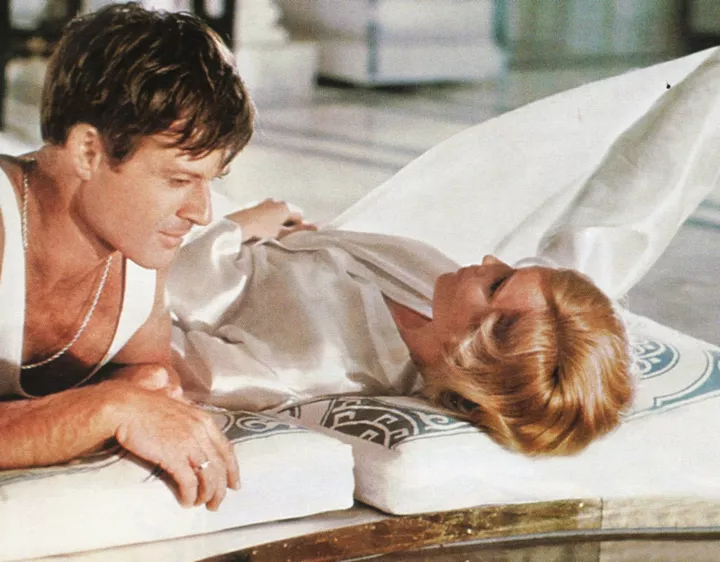
The story of “The Great Gatsby,” in any interpretation, influences subsequent film adaptations and fashion of a particular era. The costume designer for the 1974 film was Theoni V. Aldredge. In addition to winning an Academy Award for Best Costume Design, the style she created was so influential that a frame from the film was published on the cover of Time magazine, and the costumes were immediately adapted for a line sold at the American department store Bloomingdale’s.
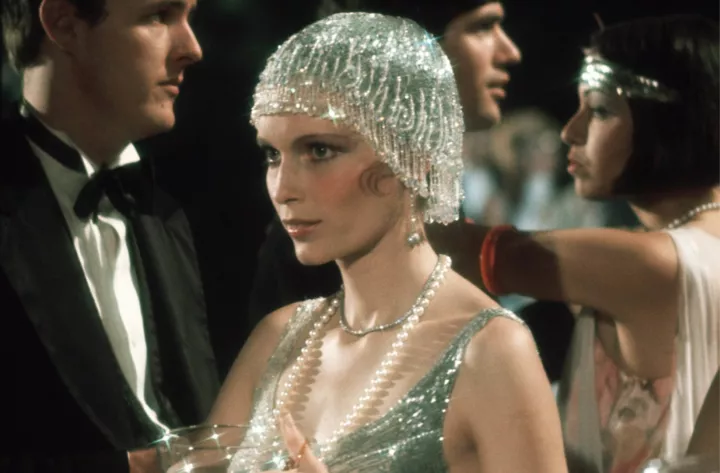
Mia Farrow as Daisy Buchanan perfectly captures the character’s contradiction between light and innocence (beautifully supported by her naturalistic clothing) and the fact that Daisy is quite superficial and self-centered. Despite these character traits, one doesn’t dwell on them thanks to the actress’s soft, romantic hairstyle and makeup: her curly cropped bob paired with dusty rose lips and cheeks created a stunning effect throughout the film.
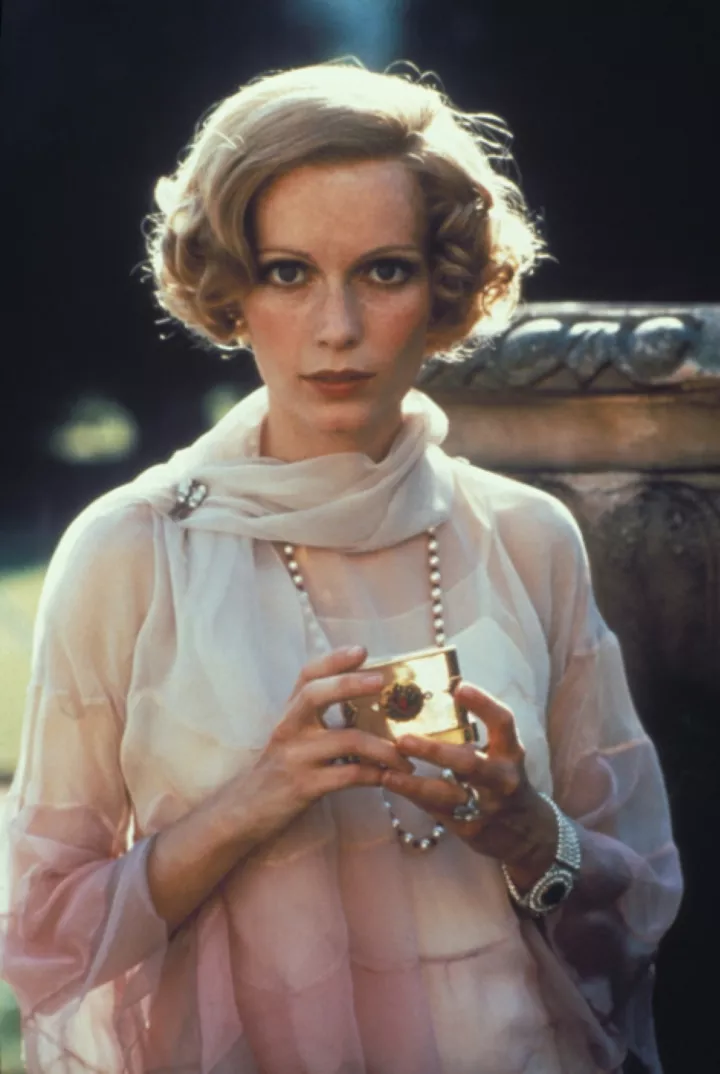
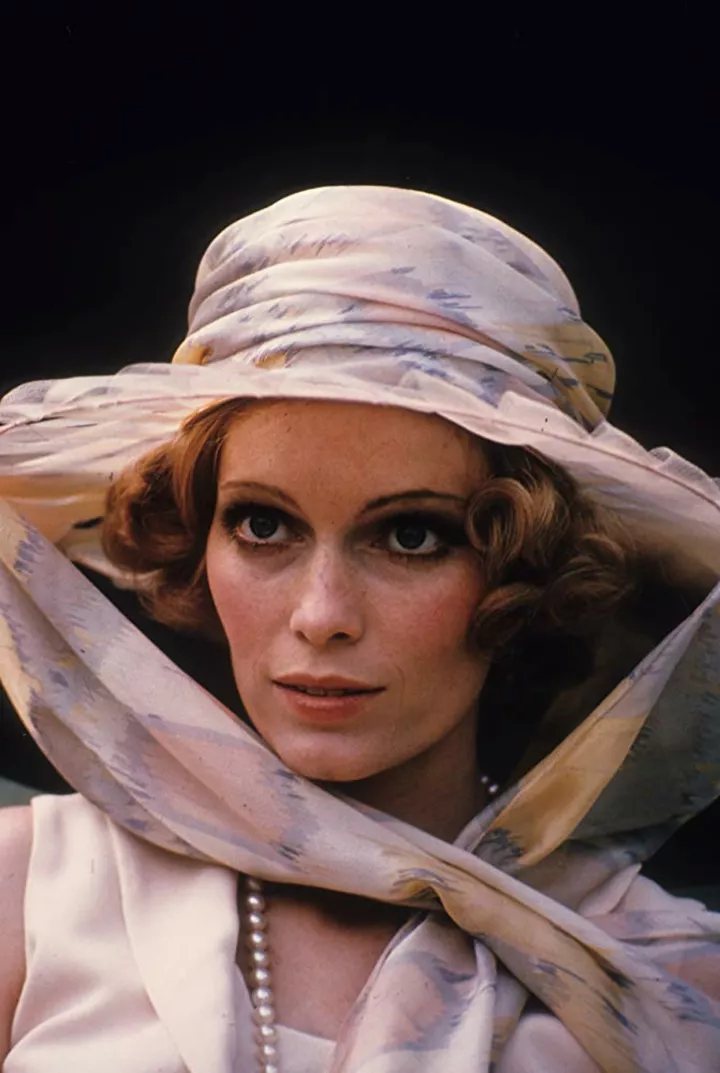
From a costume perspective, the outfits are very promising. Glamorous drop-waist dresses adorned with beads and pearls, Daisy’s shimmering silver fringed dress and jewel-encrusted headpiece, as well as a blue dress with a deep back cut-out, an amazing one-shoulder cape, and feathers in her hair – all look spectacular. White ensembles signify wealth, which is why Daisy most often wears white and pale lavender hues.
“Hannah and Her Sisters”, 1986
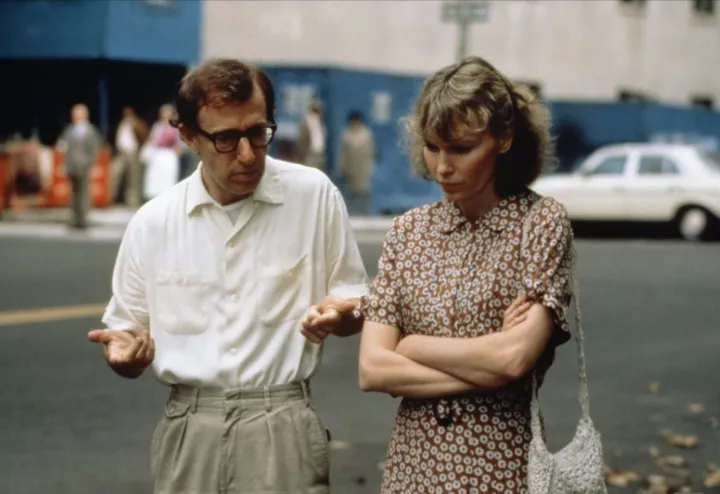
Funny and insightful, intimate and complex, “Hannah and Her Sisters” is considered by many to be one of Woody Allen’s best and most stylish films of his career.
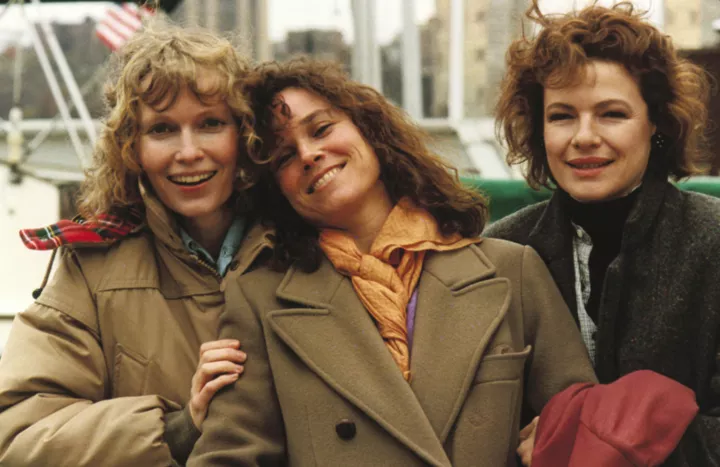
“Hannah and Her Sisters” is a vivid guide to eighties fashion. The three sisters favor button-down patterned shirts, sweater vests, oversized men’s coats and blazers, as well as various accessories. Nothing is too bright, bold, or glamorous; these are the criteria at the core of a simple style. But if all the characters in the film choose similar clothing, then the main distinguishing features of the heroines are their beauty looks. For instance, Hannah, played by Farrow, sported natural, seemingly unkempt, blonde locks that set her apart from the crowd of brunettes and dark-haired women.
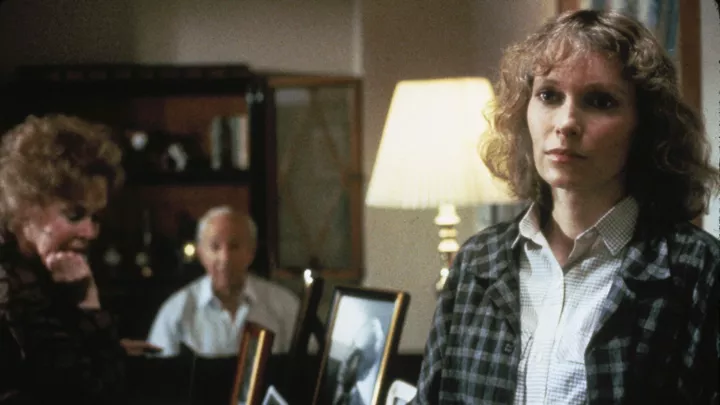
The fact that this is how many families who knew nothing about fashion dressed at the time is irrelevant – Hannah and Her Sisters became a defining example of the embrace of the “unfashionable” fashion trend that emerged around 2014 and continues to influence those who love quirky knitwear and geek-chic sneakers.