
The 2026 Cannes Film Festival proved somewhat subdued compared to previous years: this time, there was a shortage of blockbuster Hollywood premieres, works by renowned directors included mediocre films, and some movies left more questions than answers. However, there are pictures worth discussing further. The five best films of the festival are in the selection below.
“Fjord”
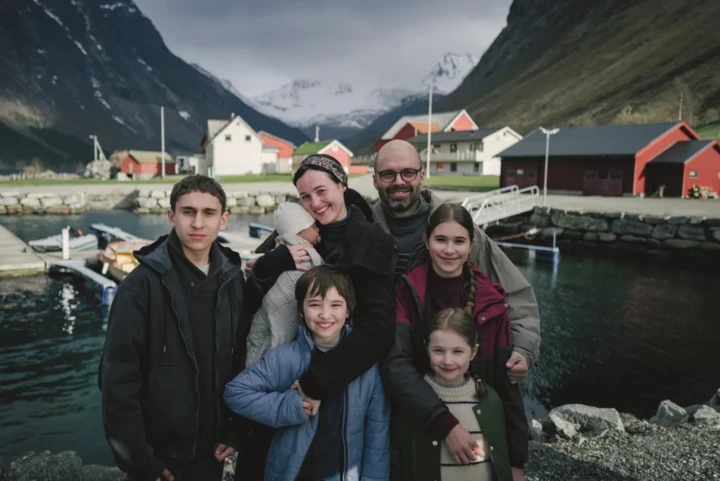
This year’s strongest film in Cannes is a cold and uncompromising thriller by Romanian director Cristian Mungiu. The plot of “Fjord” centers on a couple: the Romanian Mihai Georgiou (Sebastian Stan in an incredible transformation) and his Norwegian wife Lisbeth (the ever-brilliant Renate Reinsve), who, along with their five children, move to the remote fjords of Norway.
The idyllic picture of their new life gradually becomes unsettling. The local community, initially warm in its reception of the family, begins to view their deep religiosity with suspicion. When the eldest daughter, Elia (Vanessa Cheban), arrives at school with strange bruises, hasty conclusions trigger a chain of events that leads to all five children being taken from their parents under strict Norwegian child protection laws.
There are no clear heroes or villains in the fight to regain custody. Mungiu meticulously examines the inner world of the Georgiou family, particularly Mihai – a stern father whose authoritarian parenting style is unlikely to change. It is a film filled with powerful imagery, subtly moving performances, and complex questions about migration, child-rearing, progressive values, and cultural differences. It is no surprise that “Fjord” ultimately won the Palme d’Or at the Cannes Film Festival. Following the 2026 Cannes Film Festival, “Fjord” received the Palme d’Or, not the Grand Prix.
Advertisement.
“Club Kid”
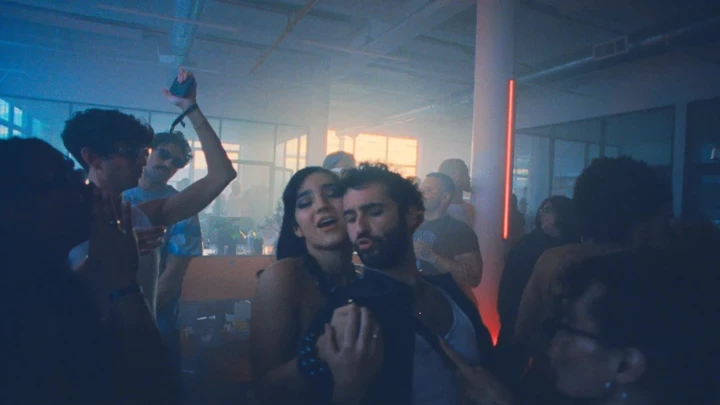
Films that leave you smiling as you exit the theater are not typically what Cannes is known for. That’s precisely why “Club Kid,” Jordan Firstman’s feature directorial debut, became a true revelation of the festival and captivated the Croisette.
The director, screenwriter, and lead actor, known for projects like “I Love LA” and “Rotting in the Sun,” has crafted a remarkably heartwarming story set against the backdrop of modern-day New York nightlife. The protagonist, Peter, is a dedicated partygoer who has long been lost amidst endless parties, drugs, and casual encounters tied to his work as an organizer of popular club events. His chaotic life takes a sharp turn with the arrival of Arlo (Reggie Absalom) – a ten-year-year-old British boy who turns out to be a son Peter never knew existed. Forced to spend time together, they become a surprisingly comical duo: Peter clumsily navigates fatherhood, while Arlo enthusiastically dives into his dad’s wild world.
Sharp humor blends with sincerity here, occasionally bordering on excessive sentimentality, yet the ending is so delicate and touching that it’s almost impossible to remain indifferent. After a fierce bidding war, the film was acquired by A24 – and it’s hard to imagine a film more suited to their aesthetic. When the movie is released widely, it will undoubtedly be a success.
“Full Phil”
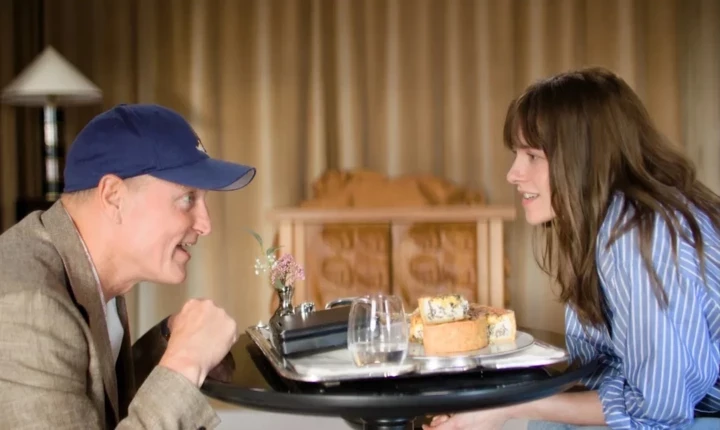
“Full Phil” is a wild, bizarre, and incredibly absurd hybrid of “Emily in Paris” and “The White Lotus.” Quentin Dupieux’s 78-minute cinematic nightmare won’t appeal to everyone, but it deserves attention.
Kristen Stewart, with visible enjoyment, spends almost all her screen time consuming virtually anything edible that comes into view. She plays Madeleine, a bothersome woman in her early thirties, the daughter of Phil, a character played by Woody Harrelson. He brings her to Paris hoping to mend their relationship, but numerous circumstances stand in their way: from Madeleine’s eccentric habits to an overly intrusive hotel employee (Charlotte Le Bon) who may be infatuated with her. And another detail: the more Madeleine eats, the faster her father’s belly grows.
Every episode here is a true festival of absurdity: riots break out in the city, dinner turns into a gastronomic ordeal, and a spontaneous party spirals out of control. And some scenes will make you laugh until you cry.
“The Boy from Congo”
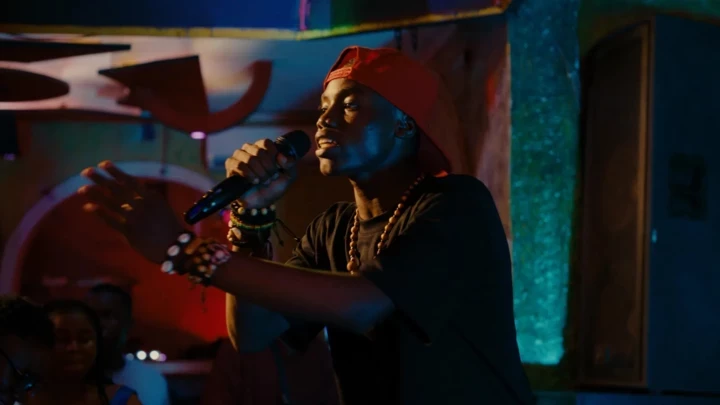
This visually stunning and musical story about a Congolese refugee teenager named Robert is a true gem of the festival. The main role is played by the charismatic Bradley Fiomona, who, incredibly, was discovered during a street casting.
The events of “The Boy from Congo” unfold in Bangui – the politically unstable capital of the Central African Republic, ravaged by civil war and located near the hero’s homeland. Every day, Robert tries to free his unjustly imprisoned parents and cares for his younger siblings. At night, he transforms into a passionate music lover and amateur singer: he visits clubs, occasionally takes the stage, and dreams of a great musical future.
In this tense epic story, the sounds of gunfire intertwine with pulsating rhythms, and moments of deadly fear give way to explosions of pure euphoria. Like many debut works, the film sometimes over-explains and simplifies certain plotlines. At the same time, director Rafiki Fariala, who is only 28 years old and makes an exceptionally confident feature debut here, brilliantly balances different tones, subtly conveying the contradictions of a young, ambitious person’s life in a country undergoing upheaval. The result is a life-affirming, energetic film that makes you want to dance your way out of the cinema.
“Teenage Sex and Death at Miasma Camp”
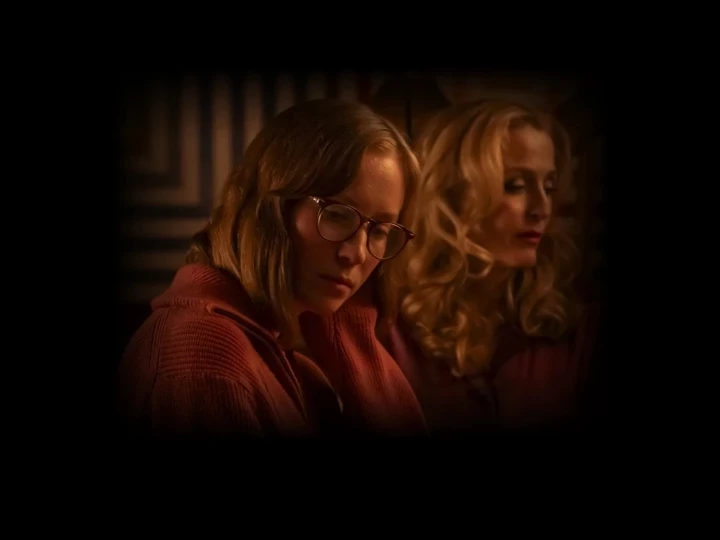
“Teenage Sex and Death at Miasma Camp” is a vibrant film that reinterprets horror, female sexuality, and the very nature of desire. The film’s protagonist is 29-year-old Chris (the wonderful Hannah Einbinder), an ambitious queer filmmaker who suddenly receives a professional offer she could only have dreamed of. “Miasma Camp” was once a popular slasher franchise, consisting of a series of low-budget, lurid films about Mr. Little Death, who resided in a river and hunted in a camp where 17-year-old teens lost their virginity. Chris, a devoted fan of the show, gets an incredible chance to revive the franchise with her own modernized vision. But a sequel is impossible without a “final girl” – a former heartbreaker who, however, left acting and now lives in complete seclusion at the very Miasma Camp. This is where Chris heads at the beginning of the film, seeking creative connection. There, she meets Billie Presley (the stunning Gillian Anderson). The glamorous blonde with voluminous curls and a seductive outfit mysteriously invites Chris for dinner at her home. Thus, during evening gatherings by the fireplace, watching the franchise’s films, and eventually, through frank conversations about each woman’s sexuality, a spiritual and romantic connection develops between them. In “Teenage Sex and Death at Miasma Camp,” director Jane Schoenbrun conquers Cannes with a wild psychosexual carnival that delves into complex issues of identity, female pleasure, and the great legacy of horror.