
When Christopher Nolan announced that his first film after “Oppenheimer,” “Odyssey,” an adaptation of Homer’s text, some were surprised: why would a director accustomed to playing with spacetime, physics, and technology return to a 2700-year-old story? And now, having sat with popcorn before the big screen for “Odyssey,” we can attest that we watched not just an adventure epic, but an adaptation of humanity’s first attempts to describe the inner workings of the psyche through an external journey – that is, through myth.
When Myth Becomes Psychology
Ancient myths, at first glance, seem like something between religious parables and secular gossip. Perhaps five millennia ago, Kateryna Osadcha with a witty tiara was strolling somewhere in the territory of Athens, and local philosophers and merchants were passionately telling her about Zeus’s affairs this season. Be that as it may, long before psychoanalysis, the ancient Greeks noticed that people constantly repeat the same behavioral patterns: the rebel, the seductress, the traveler, the sage, the warrior, etc. In the 20th century, Carl Jung would call these archetypes.
Advertisement.
Archetypes: Scripts We Live Out
An archetypal character is not a specific hero, but rather a system of stable actions, reactions, skills, and behavioral patterns. In other words… a script. A person might be Narcissus at work, a Trickster in social life, and the Eternal Youth in relationships. Archetypes do not exist in their pure form. They mix, conflict with each other, and come to the forefront during different periods of life. This is why we recognize ourselves in several characters simultaneously – because in life stories and psychotherapy sessions, people are never divided into absolutely “good” and “bad.” Jung noticed a strange regularity: people from different cultures who had never interacted created very similar stories. They repeatedly featured wise mentors, great mothers, heroes, tricksters, descents into the “underworld,” and motifs of death and rebirth. He suggested that these images are not accidental. They are born from what he called the collective unconscious – a layer of the psyche common to all humanity, formed throughout the history of our species. But let’s examine the archetypes Nolan presented to us.
Odysseus: The Hero Who Returns Changed
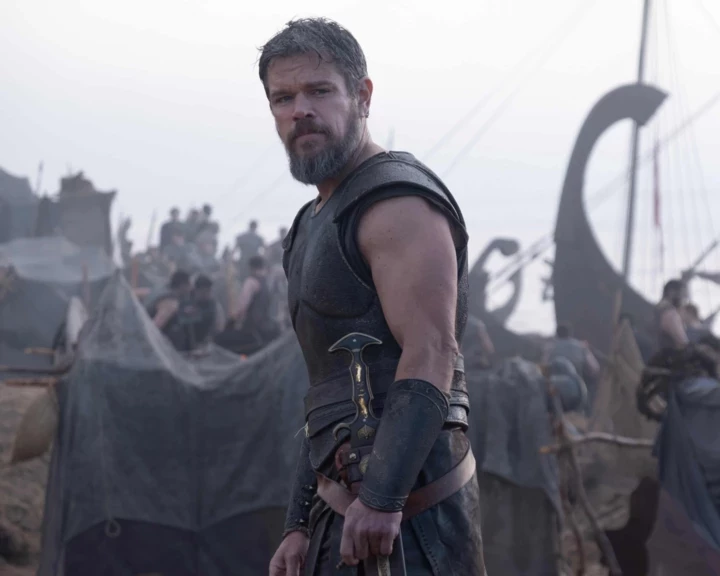
Let’s start with Odysseus. He is the classic Jungian Hero not just for defeating monsters; he transforms through trials, gaining new experience. In the film, Odysseus returns home not as the same man who left Ithaca: he is traumatized by war, burdened by guilt for his actions at Troy. This is precisely the aspect highlighted in early reviews – the film shows a hero who doesn’t boast of his victory but carries it as a burden. And what a delightful moment is his search for his new “self” after years on Calypso’s island! In Jungian terms: Odysseus is a person who must integrate his own Shadow (violence, pride, deceit) before he can return to wholeness – symbolically embodied in home and wife. By the way, speaking of his wife…
Penelope: The Great Mother or Mistress of Control?
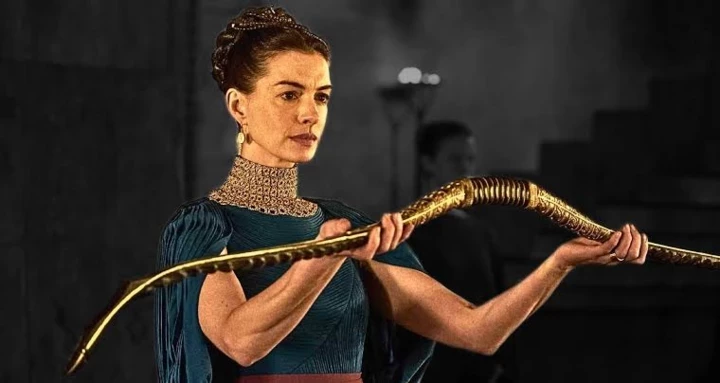
With all due respect to the romantic storyline in the film, Penelope unfolds in the archetypal role of the Great Mother. And no, I’m not referring to Telemachus (Penelope’s son), but to Odysseus himself. She guards the “safe harbor,” maintains stability within it, and lives her life not as an independent adult unit, but as a warm womb to which Odysseus can return. Each of the main male characters did what each man had to do to find his own self – both Telemachus and Odysseus separated from Penelope by embarking on independent journeys into the big world, full of challenges and danger. The archetypal mother has both a light and a dark side – it’s no wonder the suitors bullied Telemachus and called him “mama’s boy.” Penelope’s care might initially seem like loyalty to Odysseus, but later we see that her behavior rather indicates control over the situation – and over her own son.
Antinous: The Hero’s Shadow and the Trickster Archetype
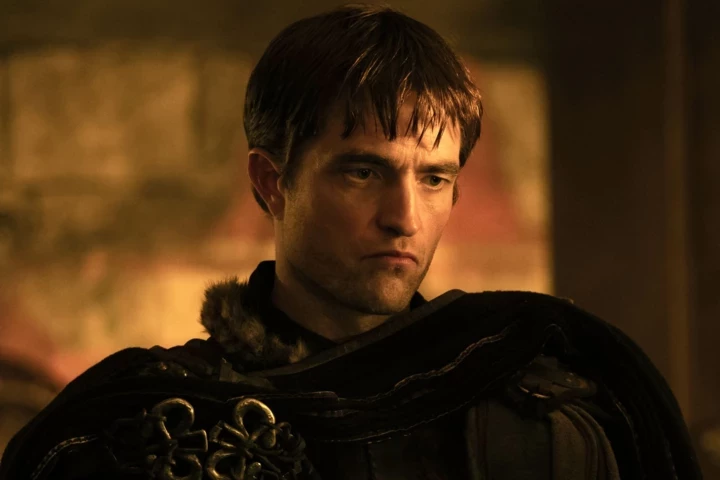
I can’t write anything about the archetype of Antinous… Not because my psychology education is insufficient for it, but because a less attractive actor than Robert Pattinson should have been cast in this role for me to analyze the film more insightfully.
But jokes aside, both he and Odysseus exhibit the Trickster archetype (a character who skillfully circumvents rules and acts through cunning). Both these characters are ready to break established rules, resort to deception and trickery for their own goals. Odysseus did this more than once as the supposed protagonist, but, as we can judge from his pangs of conscience, the hero is in no hurry to count the Trojan Horse trick among his virtues. He presented himself under a false name more than once, deceived about his intentions with Circe, with his crew, and with his own son. Such is the way of the Trickster’s script. I can assume that anyone has gone on a date with such an archetype at least once in their life.
Athena: The Voice of Inner Wisdom
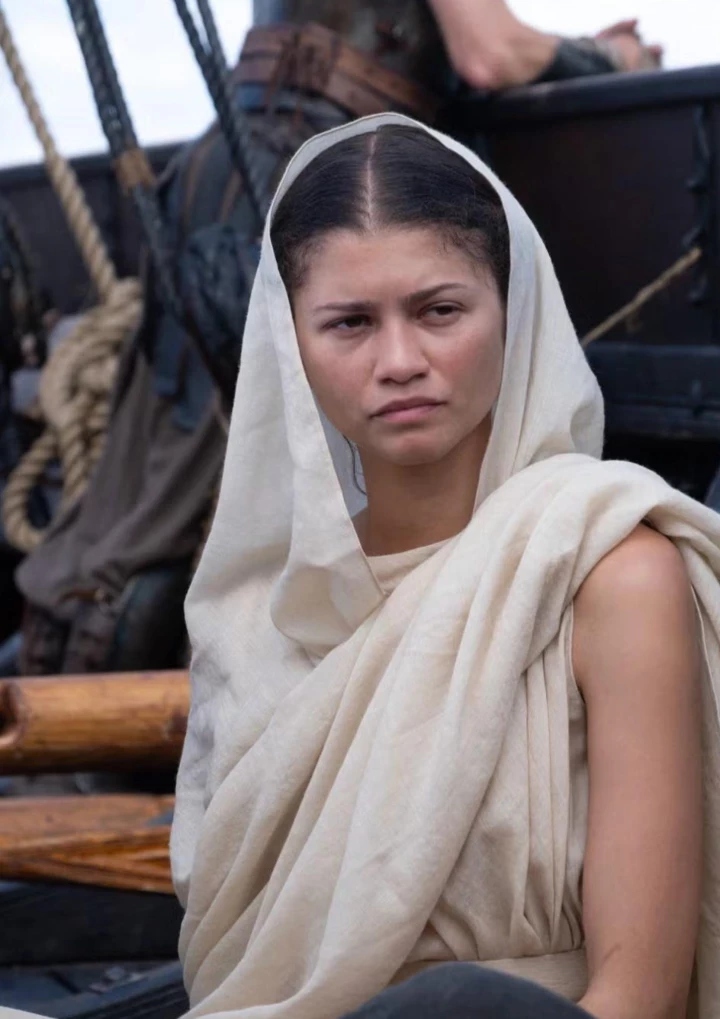
The only distilled archetype in its pure form in the film is Athena, also known as the Guide. She is the inner wisdom that appears at the opportune moment to suggest a way out of a deadlock. Jung would call this a projection of the Anima. That feminine part of the psyche that the hero has not yet learned to hear within himself, so it must appear to him from the outside, in the guise of a goddess. And every man has this part, just as every woman has the Animus, the inner mentor.
Why Myths Never Age
Besides “Odyssey,” we have another eloquent example of how our contemporaries, besides Christopher Nolan, are updating stories once written in ink on ancient parchment. Last year, Netflix reimagined the story of Orpheus and Eurydice. Well, “reimagined.” The series “KAOS” transported all the mythical heroes, namely Zeus, Hades, Poseidon, and others, into modern times, where they can go to therapy, wear Louis Vuitton, visit pubs, and attend rock concerts. Yet, the core of their characters remains unchanged. Allow me to observe that the human psyche is much more static than the surrounding world. Circumstances do not change heroes – they merely create new scenery for them to continue acting according to their archetypal schemes.
Why Do We Even Need to Know Our Archetypes?
We watch a film, write a few threads about it, and then go on with our lives. Archetypes are psychological labels by which the brain quickly recognizes familiar behavioral patterns. This is why, sometimes, just five minutes after meeting someone, we might think, “Oh, that’s a typical Narcissus” or “That’s a classic Trickster.” In fact, our expectations can then align better with reality. Can one expect the same cunning from Penelope towards Odysseus as Calypso was capable of? Could Telemachus have avoided going in search of his father and instead sat down to eat and drink with the suitors?
We’ve Changed the Scenery, But Not the Plot
For thousands of years, humanity has been telling the same story in different languages. First, it was myths. Then – tragedies, religion, fairy tales, chivalric romances, Tarot, psychoanalysis, cinema, and TV series. From Homer to Netflix and Universal Studios, centuries have passed. We have changed our language, political systems, technologies, and way of life. But we have not changed the stories we continue to tell about each other.
Zeus still fears losing power, just like hundreds of people we walk with in the city.
Orpheus still tries to bring back his beloved, like dozens of men who have been told, “Don’t do that, or the relationship is over.”
Odysseus is still looking for his way home, like thousands of clients in psychotherapy offices trying to find themselves anew.
It’s just that today they don’t live on Olympus or in Athens – they live in TV series, on the next street, and in our own inner monologues. We have changed the form, but not the plot. So, perhaps, we still return to Homer not because we are interested in Ancient Greece, but because we are still interested in the good old human being.